THE MIDDLE SCHOOL FIELD GUIDE

Less drama.
More friends.

How to dodge a fight, talk to a new person, and get through the day without becoming the main event.

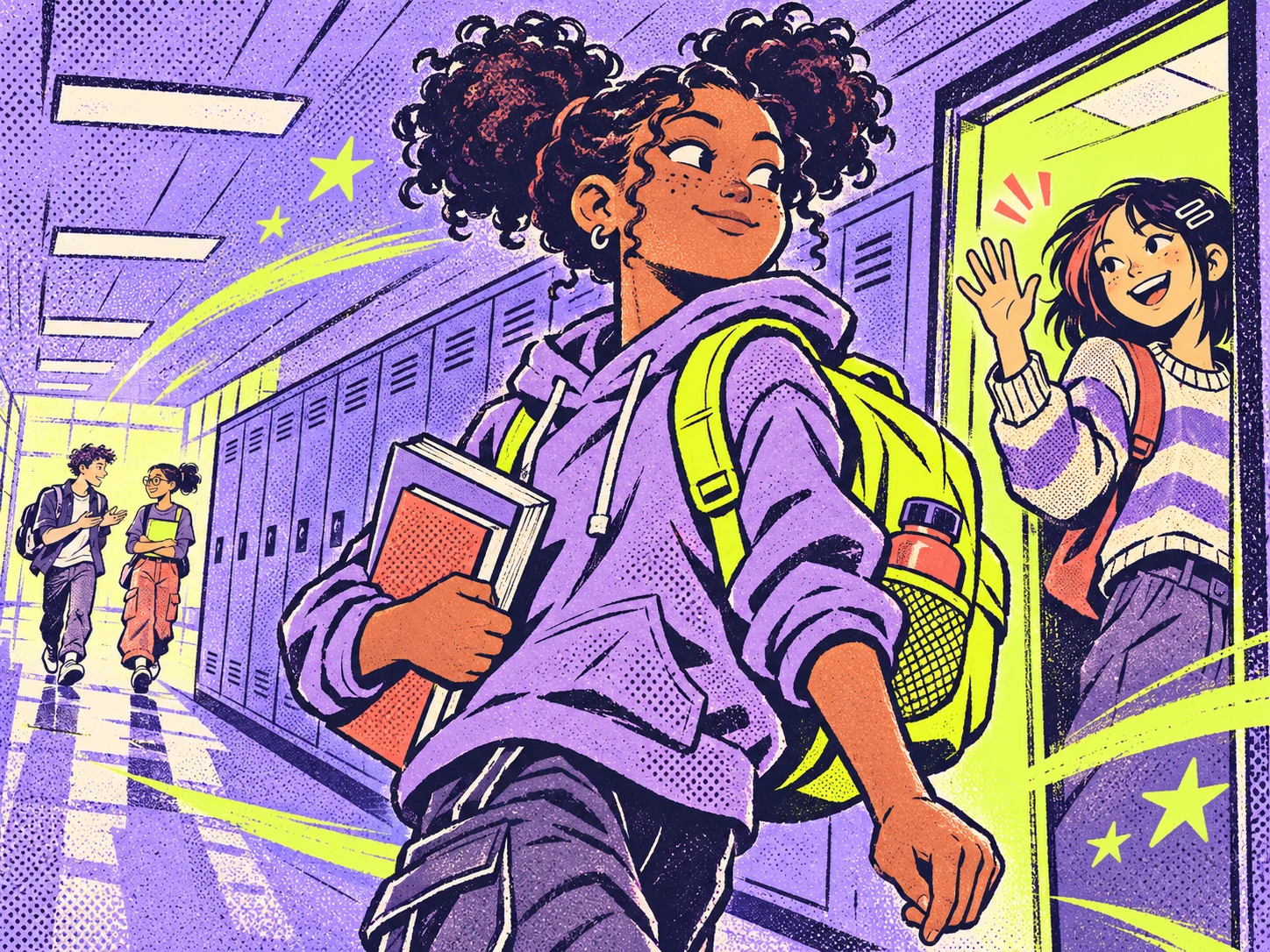
Comic illustration of a student with a bright backpack walking through a purple school hallway toward a friend.
FIG. 01   The walk-away. Extremely underrated.

01 WHEN THINGS GET HEATED

You can leave the scene.

A hallway crowd isn’t a jury. You don’t owe it a closing argument.

Read the room.

A bump and a quick “my bad” can just be a bump. Look for what comes next.

  • Heating up? A voice gets louder, someone keeps closing the gap, or a crowd starts egging it on. Head toward staff early.
  • Unsafe now? Threats, shoving, being followed, or a blocked exit mean get help now.
  • Check your own signals. Tight jaw, hot face, fists closing? Take a slow breath as you move away.
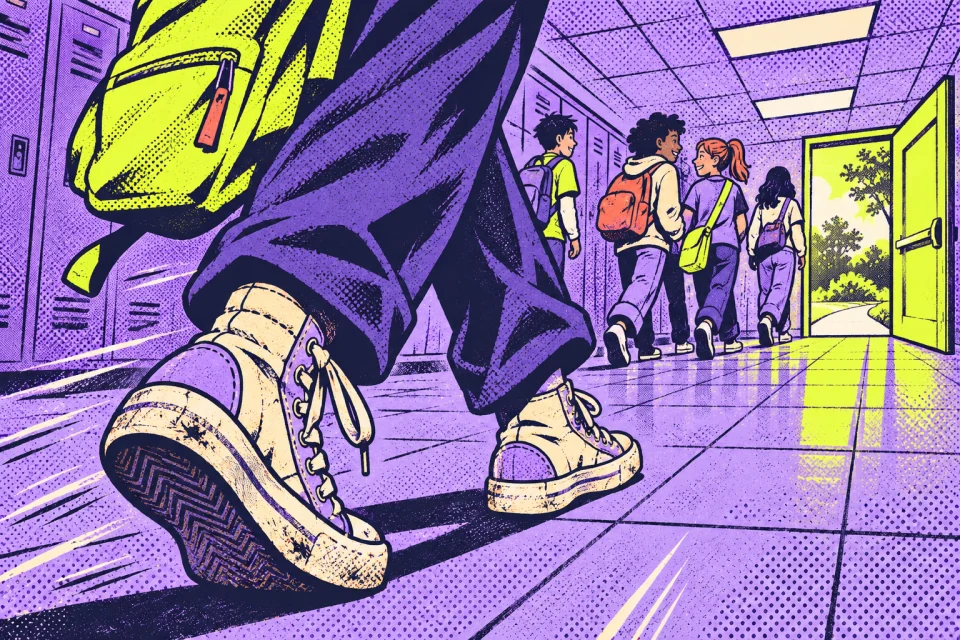
Sneakers striding down a hallway toward an open door.

One line. Then go.

Give yourself room. Keep your hands to yourself. If it feels safe to speak, use a steady voice and a short line.

“I’m heading to class.”
“We can talk later.”

Walk toward a teacher, office, bus driver, or another adult. Let any comments from the crowd pass. You can leave without saying a word. If your path is blocked, call out “I need help here!” Skip trying to shove past.

Get backup.

If someone could get hurt or keeps targeting you, tell a trusted adult. Worried about being called a snitch? Ask to talk privately or bring a friend. Getting someone to safety is a good reason to speak up.

“Can we talk? They blocked me by the lockers. I’m worried it’ll happen again. Can we make a plan?”

Say who, what, where, and when. Mention threats or fear of payback. If the first adult brushes it off, tell another.

02 THE PRACTICE ROUND

Pick your
move.

Five fictional school situations. Try a move and see what it could lead to. Zero trips to the principal’s office.

03 THE FRIEND PART

Find your people.

A club that builds a robot out of a cereal box has already solved the “what do we talk about?” problem.

Three students laugh together at a maker club table while assembling a cardboard robot.
FIG. 02   The robot also wanted to be invited.
  1. Go where there’s a thing to do. Try art club, sports, library games, or helping with the school play. Pick something you like and show up a few times. Familiar faces get easier to talk to.
  2. Start small and listen. Ask about something you both see or do. Use their answer for one follow-up, then share a little about yourself. If they’re busy or give short answers, say “See you” and try another time or another person.
  3. Make a tiny invite. “Want to sit together tomorrow?” works. Look for people who make room for you, listen, and respect a “no.” One good friend counts.

04 AFTER A ROUGH DAY

Tomorrow gets a fresh start.

One lousy day is allowed to be one lousy day.

A fight already happened.

Get to a safe place and tell an adult now, even if you started it. Get checked if you’re hurt. Tell the nurse or another adult about any hit to your head, even if you feel okay. After a head hit, signs like repeated vomiting, worsening confusion, or trouble waking need emergency care.

Tell the story in order, including what you did. Ask who you can go to and where you can wait if it starts again. Stay out of the group chat argument. Save threats privately to show an adult and leave fight videos unshared.

I said or did something I regret.

Cool off first. When it’s safe and the other person is open to it, name what you did and what you’ll do differently. “I shoved you. I’m sorry. Next time I’ll step away.” Give them space to decide how to respond. If there’s ongoing bullying or you feel unsafe, ask an adult for a plan and skip meeting alone.

Today was just awful.

Eat something, get some water, and take a break from the chat. Tell someone you trust what’s still bothering you. Pick one small move for tomorrow, like sitting near a friendly face or checking in with your counselor before lunch. If rough days keep piling up, tell an adult how often it’s happening.

FOR THE GROWN-UPS

Be the backup.

Start with “I’m glad you told me. What would help you feel safe tomorrow?” Listen before solving. Practice an exit line together. If there’s a threat or a pattern, work with the school on a specific plan: who they can go to, where they can go, and when you’ll check in. Take fears of payback seriously and ask the school to keep the kids apart while staff figure out what happened.