Make some space.
Step back if you can. Keep your hands open and your voice low. No pointing, crowding, or staring contest. This is a hallway, not a nature documentary.
THE UNOFFICIAL MIDDLE SCHOOL FIELD GUIDE
Make friends. Dodge fights. Get through the day without becoming a group chat announcement.
For ages 11–14. No popularity contest. Zero trust falls.
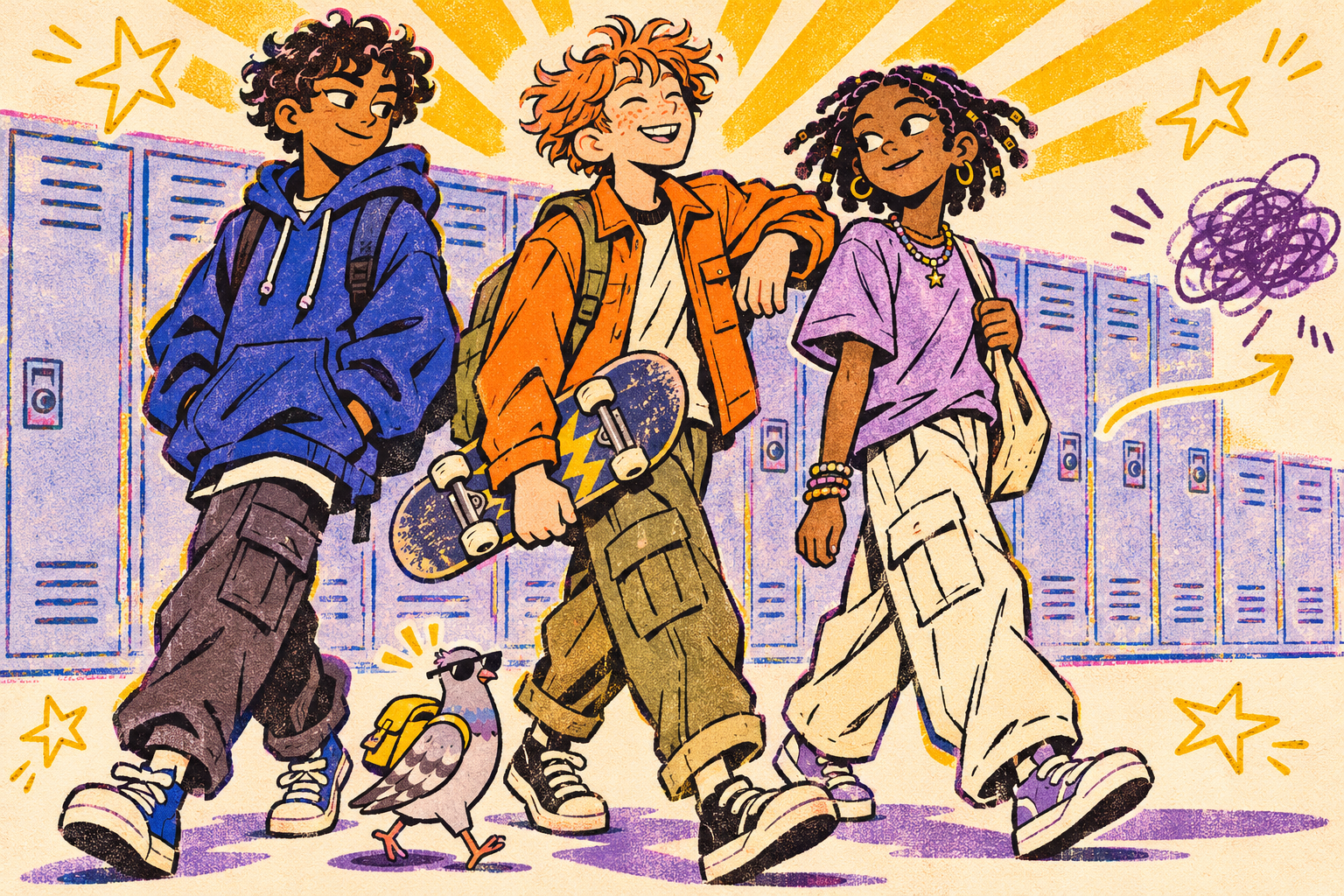
a solid crew > an audience
01 / THE EXIT STRATEGY
Your best move can be… moving.Your brain may be writing a devastating comeback.
Give it a different assignment: get you out safely.
Step back if you can. Keep your hands open and your voice low. No pointing, crowding, or staring contest. This is a hallway, not a nature documentary.
Try “I’m not fighting” or “I’m going to class.” Skip the last insult. Walk toward staff or a supervised group. You don’t need their permission to leave.
If they follow, threaten, block, or touch you, get an adult right away. You don’t have to try a perfect script first. Safety beats finishing the conversation.
“Not worth it. I’m out.”
“We can talk later.”
“I’m going to class.”
Built from the American Academy of Pediatrics and Crisis Prevention Institute guidance. Sources below.
READ THE ROOM
Clues aren’t proof of what someone will do. You can leave whenever something feels unsafe.
Hot face? Tight fists? Heart racing? Notice it, loosen your hands, and take a slow breath. Make space before your mouth starts freelancing.
Voices rising, people moving closer, a crowd gathering, phones coming out? Leave toward adults early. Don’t wait around to find out whether it’s “just a joke.”
A blocked exit, grabbing, a threat, or a weapon means get help immediately. Call out to a specific adult. Don’t agree to meet somewhere private. See the help plan below.
02 / PRACTICE MODE
Five fictional situations. Three possible moves. A chance to try the thing before the thing happens.
No timer. No public score.
Bad choices here cost exactly zero teeth.
ROUND 1 / THE HALLWAY
There’s room to leave. A teacher is by the next classroom.
03 / FIND YOUR PEOPLE
Social skills. No subscription required.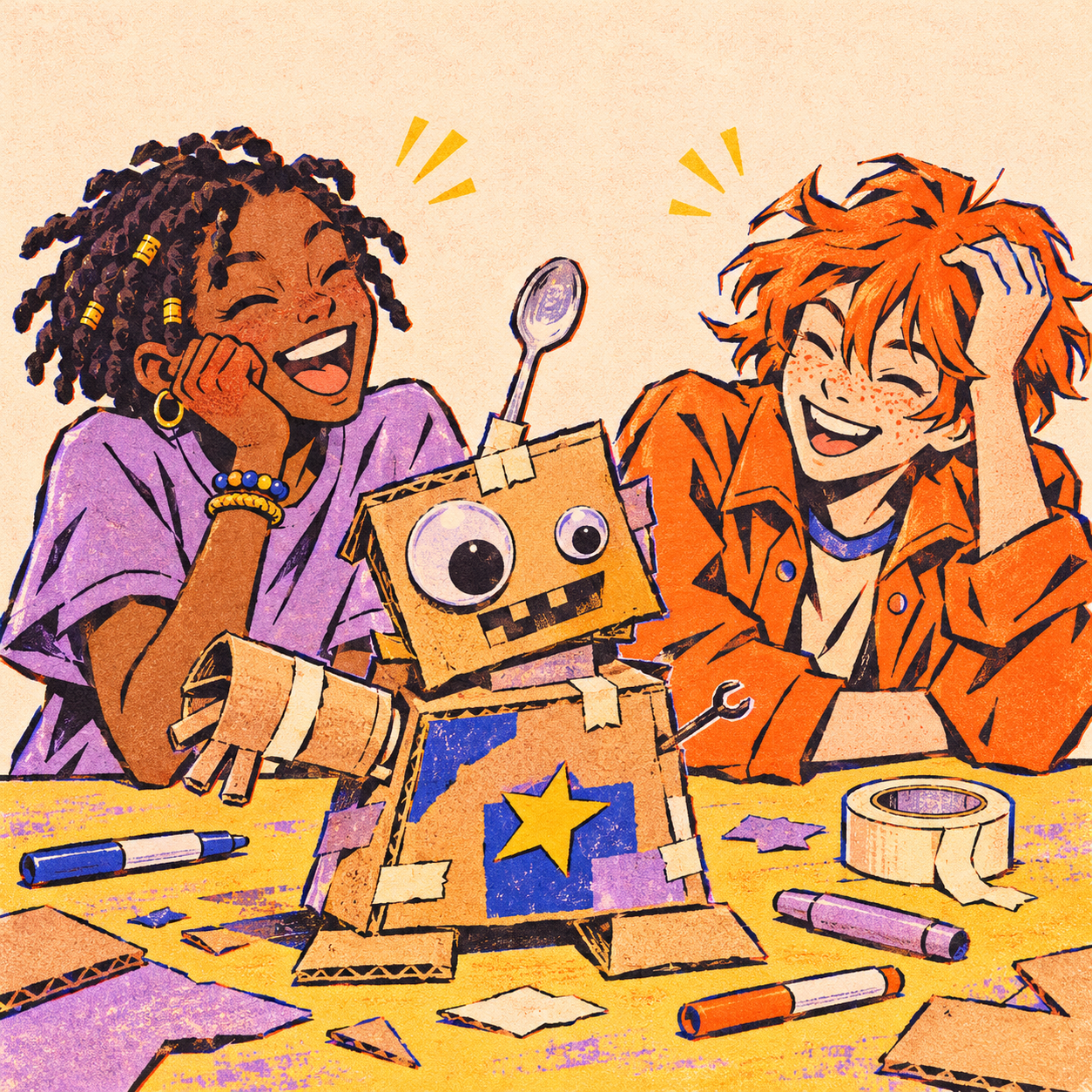 shared interests. questionable engineering.
One or two people you can be yourself around beats a whole table where you’re auditioning.
Art, robotics, library games, sports, music, a lunch club. A shared activity gives you something to do while the talking warms up. Try showing up again.
Say hi. Ask one real question. Listen, then share a little too. It’s a conversation, not a police interview about someone’s favorite dinosaur.
Good people include you, respect “no,” and let you like your own stuff. You don’t owe anyone a friendship fee paid in insults to someone else.
THE ANTI-AWKWARD OPENER MACHINE
Then listen to the answer. That part matters.
“Is this seat free?”
Short replies? They might be busy, shy, or not in the mood. “Cool, see you around” is a valid ending. Try someone else later. Eye contact is optional; paying attention isn’t.
04 / CALL IN YOUR BACKUP
You’re allowed to get help, even if someone tries to make that embarrassing. Tell a counselor, teacher, coach, or parent privately. Bring a friend if that helps.
Say what happened, where and when, who was there, and what you need next. If the first adult doesn’t help, tell another. Keep going.
Bullying involves a power imbalance and repeated harm, or the chance it will repeat. It needs adult help, not a forced “hug it out.” Even a one-time threat deserves help.
WORDS YOU CAN ACTUALLY USE
“Can we talk privately? Someone keeps targeting me. Here’s what happened and when. I need help making a plan so it stops. I’m worried about what happens if they find out I told.”
Ask: “What happens next? Who needs to know? How will you help keep me safe?” Adults may need to share information to protect you.
05 / THE RESET BUTTON
Bad day. Not your whole biography.A bad choice needs repair. It doesn’t have to become your identity.
After a fight, go to an adult. Tell the school nurse or a parent about any injury, especially a hit to the head. Stay away from a round two. Be honest about what you did, too.
Once you’re safe, take a break from the chat, have water or a snack, walk, draw, or talk to someone you trust. Name what’s under the anger: embarrassed? Hurt? Left out? Work on the problem after the surge passes.
“I shoved you. That was wrong. I’m sorry. Next time I’ll step away and get help.” Make repairs with adult support if needed. Give the other person time. An apology doesn’t buy instant forgiveness—or require you to stay friends.
With an adult, pick a safer route, a check-in person, and one move to practice. If fear, anger, or trouble sleeping keeps sticking around, tell a counselor or your doctor. Help is for you, too.
even this guy takes a minute.
Only once you’re somewhere safe. Breathe gently; no holding required. Stop if it feels uncomfortable.
SKIP THE TIPS IF YOU’RE IN DANGER
If someone is attacking, trapping, or seriously threatening you, or there’s a weapon: leave if you safely can, call out for help, and get to school staff or another trusted adult. Don’t meet them alone or try to break up a fight.
Immediate danger or serious injury? Have someone call emergency services, or call yourself if you can—911 in the U.S. and Canada; your local emergency number elsewhere. You don’t have to manage this on your own.
TAKE THE GOOD STUFF WITH YOU
Listen first. Thank your kid for telling you. Ask what would help them feel safe, document the facts, and follow up with school staff. Practice one calm exit line together without grading their performance.
Don’t ask a child to handle bullying alone, fight back, or sort it out privately with someone who is threatening them. Ask the school about supervision, a check-in adult, retaliation concerns, and when you’ll hear back. Help with repeated anger or distress can include their pediatrician or a mental health professional.
REAL ADVICE. VERY UNREAL PIGEON.
The guidance comes from these sources. The jokes, examples, and practice game are ours. This guide can help you practice; adults are responsible for keeping school safe.
Researched November 17, 2026. No accounts, tracking, or information sent anywhere. Illustrations are AI-generated; all characters and situations are fictional.
Leaving safely, getting adult help, and supporting someone being bullied.
Body signals, safe distance, avoiding insults, and walking away.
Personal space, calm body language, and short, clear speech. Adult guidance adapted here for safe student exits.
Shared activities, practicing social scripts, and realistic friendship goals.
Concrete conversation starters, listening, and finding kind friends.
Calming down before solving problems and naming feelings.
Taking responsibility, making a sincere apology, and allowing time.
Adult support and different approaches for conflict and bullying.
Safety plans, follow-up, and why bullying is not a conflict for peer mediation.
Saving evidence, avoiding replies, and reporting threats.
Medical needs, weapons, serious threats, and immediate adult response.