From Mild Salsa to
Thermonuclear Glory.
Welcome to the sanctuary of heat. Made by a fan for fellow heat-seekers—whether your limit is a polite bowl of grocery-store salsa or you casually drizzle pure Carolina Reaper mash on your morning eggs. Here is the true chemistry of the burn, the real peppers of the world, and how to survive the climb.
0 to 16M
Scoville Heat Units
114 Years
Organoleptic Science (1912-2026)
100%
Zero-Regret Survival Rules
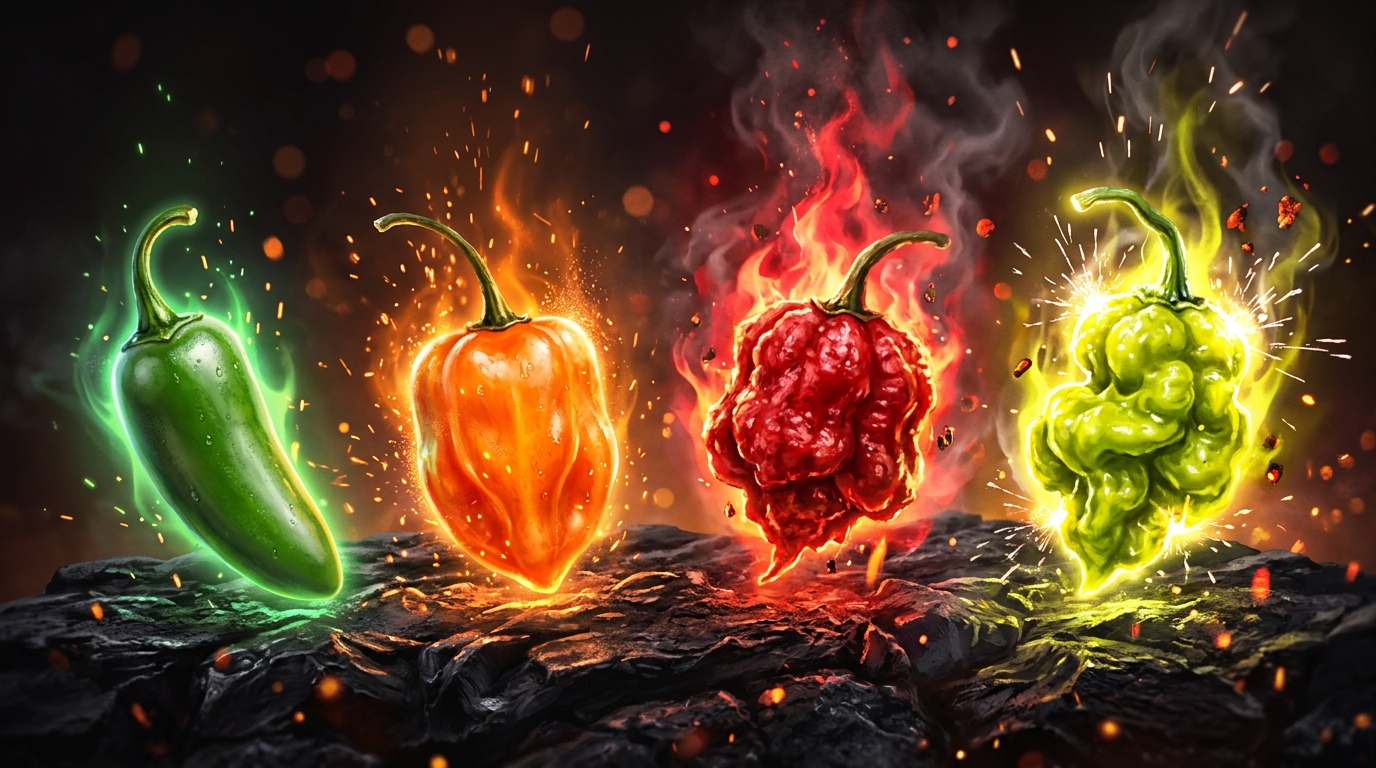
The Scoville Elevator
Step inside the elevator. As you climb from sweet bell peppers to Ed Currie's certified record-holding Pepper X, watch the sensory profile, burn mechanics, and survival protocols transform in real time.
Habanero
🔥 Burn Mechanics
The classic 'creeper'. Tastes juicy and tropical for 10 seconds before unleashing a glowing furnace across your mouth.
🍋 Flavor Notes
Apricot, mango, tropical flowers, honeyed citrus, followed by searing heat.
⏱️ Onset & Duration
Delayed 10-15 seconds. Then blooms into a 10-minute radiant burn.
🥊 Real-World Reality Check
A tropical vacation that abruptly turns into a voluntary fire drill.
Wilbur Scoville's 1912 Taste Panel
In 1912, American pharmacist Wilbur Scoville developed the first systematic pungency measurement at Parke-Davis: the Scoville Organoleptic Test. Dried peppers were dissolved in pure grain alcohol to extract their capsaicinoids, then diluted in precise ratios of sugar-water.
A panel of five trained human tasters sipped progressive dilutions until at least three could no longer feel any burn. If one part pepper extract needed 5,000 parts sweetened water to disappear, it was rated 5,000 SHU.
The Problem: Human palates suffer rapid sensory fatigue, tongue numbness, and wildly differing subjective tolerances. One taster's mild tingle is another's panic attack.
Modern High-Performance Liquid Chromatography (HPLC)
Today, food scientists do not subject human tongues to 2,000,000 SHU assault. Instead, the spice industry relies on HPLC (ASTA Method 21.3), standardized by the American Spice Trade Association.
The pepper sample is injected into a pressurized column that physically separates individual capsaicinoids—principally capsaicin, dihydrocapsaicin, and nordihydrocapsaicin. Ultraviolet and fluorescence sensors measure their exact concentrations in parts per million (ppm), designated as ASTA Pungency Units.
The Math: When Guinness World Records verified Ed Currie's Pepper X at 2,692,990 SHU in late 2023 (confirmed active through November 2026), it was tested over dozens of samples using rigorous HPLC lab spectroscopy at Winthrop University.
Why Capsaicin Burns Your Brain
Hot peppers do not cause chemical burns, blister your skin, or raise your tongue temperature by a single degree. Your nervous system is simply being hijacked by a brilliant evolutionary booby-trap.

The TRPV1 Thermal Illusion
Inside your mouth, throat, and gastrointestinal tract sit specialized nociceptor neurons equipped with an ion channel called TRPV1 (Transient Receptor Potential Vanilloid 1).
-
1
The False Fire Alarm
TRPV1's biological day job is detecting physical thermal heat above 43°C (109°F) and tissue damage. When you drink boiling soup, TRPV1 snaps open to keep you from burning yourself.
-
2
The Molecular Lockpick
Capsaicin shares a chemical shape that fits directly into the intracellular pocket of TRPV1. It forces the receptor wide open at ambient body temperature (37°C), allowing calcium and sodium ions to flood the nerve.
-
3
The Full Brain Panic
Your brain receives high-priority distress signals screaming "THE MOUTH IS ON FIRE!" It triggers an emergency physical defense: rapid sweating, runny nose, dilated blood vessels (the hot sauce flush), and hiccups.
-
4
The Endorphin Payoff
To cope with the phantom trauma, your brain floods your bloodstream with natural opioids—endorphins and dopamine. This is the fabled "Chilihead High" that turns pepper eaters into lifelong addicts.
The Antidote Playbook: Science vs. Myths
What actually strips capsaicin off your nerve endings when you've gone too far.
Casein & Dairy Fats
The MVP: Whole milk, vanilla ice cream, sour cream, full-fat yogurt, and cheese. Milk contains casein, a phosphoprotein with lipophilic properties. Casein surrounds non-polar capsaicin molecules like dish detergent surrounding bacon grease, washing them off your TRPV1 receptors.
Fats, Oils & Peanut Butter
The Solvents: Capsaicin is fat-soluble (lipophilic). A tablespoon of peanut butter, olive oil, or ripe avocado dissolves the capsaicin oil clinging to your tongue and carries it down into your stomach without further localized irritation.
Granulated Sugar & Honey
Sensory Masking: High concentrations of sucrose and fructose trigger sweetness receptors that competitively inhibit the brain's pain pathways. A spoonful of honey or table sugar also physically absorbs oily surface residue.
Cold Water
The Grease Fire Error: Chugging water feels briefly cooling for 2 seconds, but capsaicin is completely hydrophobic and insoluble in water. You are essentially throwing a cup of water onto a grease fire, spreading capsaicin oils down your throat and across every unburned taste bud.
Beer & Carbonated Drinks
The Agitator: Standard beer is only 4-6% ethanol, which is far too dilute to dissolve capsaicin. Worse, carbonic acid bubbles physically agitate sensitized TRPV1 receptors, amplifying the stinging sensation by up to 30%.
Lemon & Lime Juice
The Neutralizer Myth: While some claim citric acid chemically neutralizes alkaline capsaicinoids, pure capsaicin is actually neutral, not an alkali. However, tart citric acid stimulates heavy salivation and provides a distracting gustatory stimulus.
The Hot Sauce Alchemist
Formulate your dream craft hot sauce. Pick your culinary base style, dial in your pepper blend ratios, add aromatics, and watch our food-science engine calculate the estimated Scoville heat, flavor balance, and render your custom bottle label!
Select Culinary Base
Balance Your Pepper Blend (grams per 150ml bottle)
Aromatics & Flavor Enhancers
Name Your Concoction
Virtual Bottle & Lab Assay
Dragon's Golden Whisper
84,500 SHUKeep dairy on speed dial. Forehead sweating guaranteed.
The Great Sauce Styles of the World
Every pepper-loving culture solved the same puzzle in their own extraordinary way: how to balance fire, acid, salt, and fermentation so the heat elevates the feast rather than ruining it.
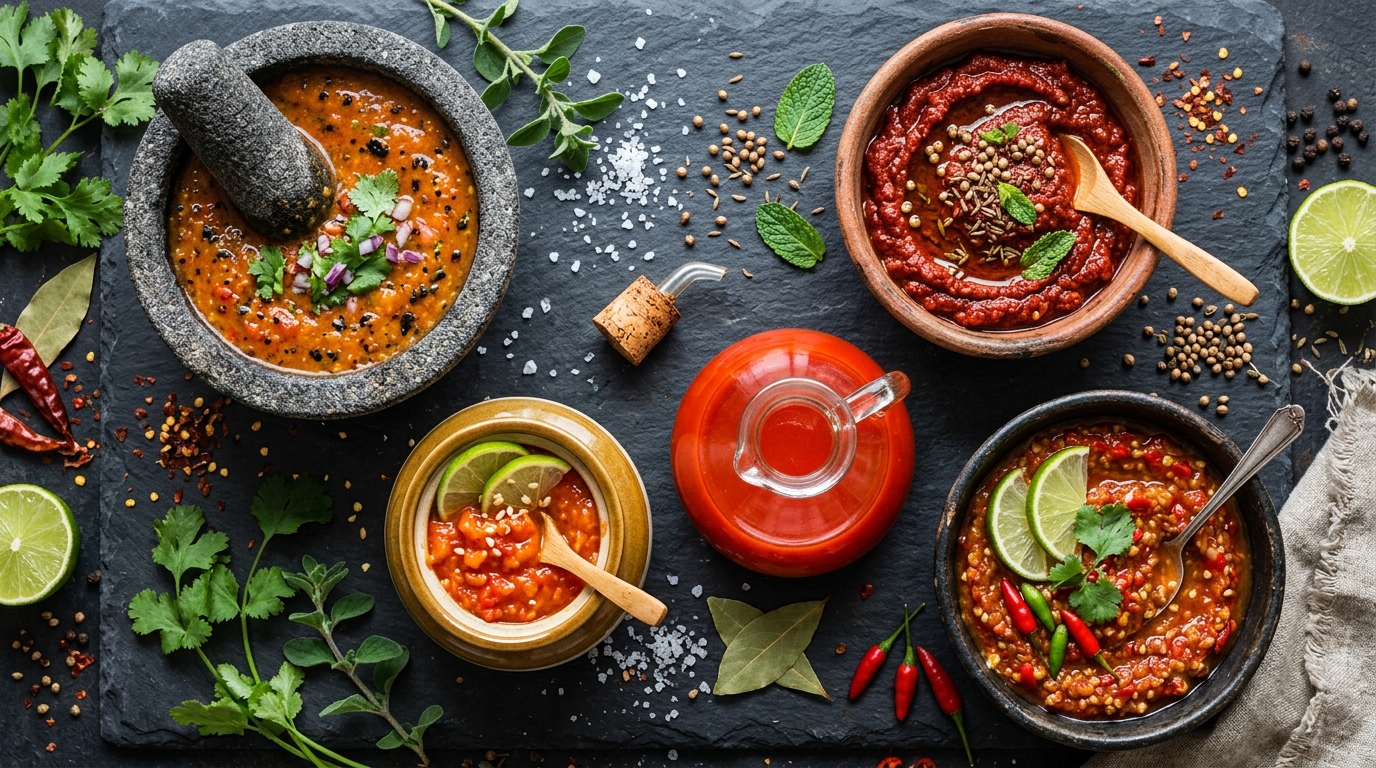
Louisiana Vinegar Style
Born in 19th-century Louisiana bayous and popularized by Tabasco (Avery Island) and Crystal. Fermented pepper mash aged for up to 3 years in white oak whiskey barrels, then vigorously blended with distilled vinegar and salt. Thin, razor-sharp, salty, and ultra-tangy.
Caribbean Scotch Bonnet & Mustard
A magnificent marriage of golden yellow mustard, cane vinegar, turmeric, allspice, diced green mango or papaya, and fragrant scotch bonnet peppers. The heat creeps in gently under floral and tropical fruit sweetness, finishing with a sharp mustard tickle in the sinuses.
Mexican Habanero & Chile de Árbol
Unlike vinegar-heavy American styles, traditional Yucatecan habanero sauces (Kutbil-Ik) and Oaxacan salsas prioritize blistering char from an iron comal or open flame. Seasoned with sour Seville orange juice, roasted garlic, and Mexican oregano. Rich, smoky, and intensely aromatic.
Original Thai Sriracha
Before the famous green-capped rooster bottle became a California staple, Sriracha originated in the seaside town of Si Racha, Thailand. Traditional Thai Sriracha (like Sriraja Panich) is smoother, runnier, and balances bright garlic, cane sugar, and natural lacto-fermentation.
African Piri-Piri (Peri-Peri)
Created when Portuguese settlers in Southern Africa encountered the fiery wild African bird's eye pepper. Blended with fresh lemon or lime juice, crushed garlic, bay leaves, paprika, oregano, and olive oil. Vibrant, herbaceous, citrus-forward, with an energetic needle-like burn.
Tunisian Harissa Paste
Recognized on UNESCO's Intangible Cultural Heritage list. Sun-dried red chilies pounded with caraway seeds, roasted coriander, cumin seeds, garlic cloves, and extra-virgin olive oil. Thick, velvety, deeply savory, and aromatic rather than punishingly spicy.
The Tolerance Ladder: Build Fire Without Regret
Nobody wakes up on a Tuesday and casually eats a Carolina Reaper. Spice tolerance is a genuine neurological adaptation: your TRPV1 receptors become temporarily desensitized with controlled, consistent exposure. Here is the golden protocol.
Micro-Dosing Everyday Heat
Start where you are. If mild salsa makes you sweat, switch from mild to medium salsa verde. Add 3 drops of jalapeño sauce to your breakfast eggs daily. Do not rush to habanero.
The "Always With Fat" Law
Move up to Cayenne, Serrano, and Thai chilies. Always consume your heat with dairy, cheese, avocado, or fatty meats. Fat slows down absorption and prevents stomach lining shock.
The Chinense Gateway
Graduate to Habanero and Scotch Bonnet. Learn to ride out the 15-second delay. Breathe steadily through your nose. Notice the tropical mango/apricot notes before the burn peaks.
The Superhot Threshold
Approaching Ghost Pepper, Scorpion, and Reaper sauces. Treat these like culinary extracts: use a single toothpick dab on a slice of pizza. Wear gloves if chopping raw pods.
The 2 AM "Cap-Cramps" Shield
Superhots can trigger violent stomach contractions 4 hours later as the intestines detect high capsaicin. Drink a small glass of kefir, full-fat milk, or eat a banana before sleeping.
What Is Your Pepper Soulmate?
Take our 60-second personality and heat calibration quiz to discover your exact chili soulmate, matching craft sauce style, and survival profile.
It's 2 AM and you're eating tacos. What's your hot sauce move?
The Habanero Connoisseur
You understand that true spice is about flavor harmony, not self-harm. You appreciate the slow 15-second creeper burn of Capsicum chinense, and you savor the tropical fruit perfume of Scotch bonnet and mango.
The Hot Vault
Our hand-picked library of the greatest interview shows, master growers, small-batch craft makers, recipe guides, festivals, and chilihead communities. Each link is accompanied by our honest fan review of why it is worth the click.
Hot Ones: Conan O'Brien Meltdown
First We Feast Season 23 Finale. Conan brings his personal quack doctor, drinks sauce straight from the bottle, rubs Da' Bomb into his face, and turns a celebrity interview into thirty minutes of pure comedy anarchy.
Hot Ones: Paul Rudd ("Look At Us")
Season 10 Finale. The origin of the immortal "Look at us. Who would've thought? Not me!" meme. Paul Rudd ends by blending every remaining hot sauce bottle into a horrifying Frankenstein slurry.
Hot Ones: Lorde's Ice-Cold Gauntlet
Season 15 Finale. While grown action stars wept, Lorde casually took down Da' Bomb and The Last Dab without a single sip of water or milk, poetically dissecting sound design as if drinking chamomile tea.
Chili Klaus & Danish National Chamber Orchestra
Danish chili pioneer Chili Klaus conducts the entire orchestra as they consume whole Carolina Reapers and Ghost Peppers before playing 'Tango Jalousie' with reddened, tear-filled faces.
White Hot Peppers
The gold-standard independent seed bank for chili growers worldwide. Famous for isolated seeds, rare superhot phenos (BBM, Peach Ghost, Chocolate Bhutlah), extraordinary germination rates, and generous freebie packs.
The Chile Pepper Institute at NMSU
The world's only international non-profit research institute dedicated to Capsicum, based at New Mexico State University. Founded by Dr. Paul Bosland, it is the birthplace of the certified NuMex cultivars and academic chili science.
PuckerButt Pepper Company
The Fort Mill, South Carolina headquarters of "Smokin'" Ed Currie—the mad scientist breeder behind the Carolina Reaper and Guinness World Record-holder Pepper X (certified at 2.69M SHU).
Torchbearer Sauces (Garlic Reaper)
An independent Pennsylvania craft sauce powerhouse known for balancing absurd, face-melting heat with insane culinary richness. Creators of the cult-classic Garlic Reaper, Zombie Apocalypse, and Sweet Onion Habanero.
Queen Majesty (Red Habanero & Coffee)
Handcrafted in Red Hook, Brooklyn by reggae DJ and culinary creator Queen Majesty. Celebrated for inventive flavor pairings including Scotch Bonnet & Ginger, and Red Habanero & Black Coffee.
Chili Pepper Madness (Mike Hultquist)
The ultimate culinary encyclopedia for hot sauce makers. Covers foolproof lacto-fermentation brine ratios, pH stabilization with testing strips, canning safety, pepper powder dehydration, and hundreds of tested recipes.
NYC Hot Sauce Expo (Brooklyn, NY)
Founded by Steve Seabury of High River Sauces, this annual celebration brings 50+ craft makers, the Screaming MiMi Awards ceremony, and the legendary Stage of Doom Carolina Reaper eating challenges to Industry City.
r/HotPeppers Community
Over 170,000 passionate backyard growers, indoor hydroponic hobbyists, and cross-breeders sharing troubleshooting tips, harvest photos, seed swaps, and overwintering advice.
The Hot Pepper (THP Forum)
The legendary classic message board where superhot history was forged. Long before modern social feeds, THP was where breeders documented the earliest Bhut Jolokia grows, Moruga Scorpion stability tests, and commercial sauce formulation.